Officials at the Nangarhar Directorate of Agriculture, Irrigation, and Livestock say that in the 22 districts of province, several check dams have been constructed to feed water sources and deliver water to agricultural lands, with work ongoing on additional dams. According to the officials, these check dams are built to improve water management, prevent soil erosion, and reduce damages caused by floods—measures that ultimately help protect farmland from destruction.
Ajmal Subhani, head of the media section at the Directorate of Agriculture in Nangarhar, told Salam Watandar that 27 check dams have been constructed across the 22 districts, including Jalalabad city, and that construction continues. According to him, these check dams allow water to gradually infiltrate the soil, a process that helps raise groundwater levels and partially alleviates the water scarcity faced by residents.
He added that 27 check dams had been built in Nangarhar, and another was under construction in the fifth district of Jalalabad city. He explained that these check dams were constructed to recharge groundwater and store rainwater, which helps prevent floods and raise groundwater levels.
Officials at the Directorate of Agriculture in Nangarhar emphasize that constructing check dams is one of the solutions that can effectively improve water resource management in the province. They add that, given the increasing droughts and the decline in regular rainfall in recent years, the need for such projects is greater than ever.
Meanwhile, residents of Nangarhar have expressed satisfaction with the construction of these check dams, but they urge the Islamic Emirate and partner organizations to implement similar projects in other districts, so that farmland can be enhanced, floods prevented, and groundwater resources increased.
Abdul Rahman, a farmer in ‘Bati Kot district’ of Nangarhar, said, “Our request to the officials of the Directorate of Agriculture is that check dams should be built not only in Bati Kot but in all districts of Nangarhar because rainwater will be stored there, and during drought, farmers can use it to irrigate their lands.”
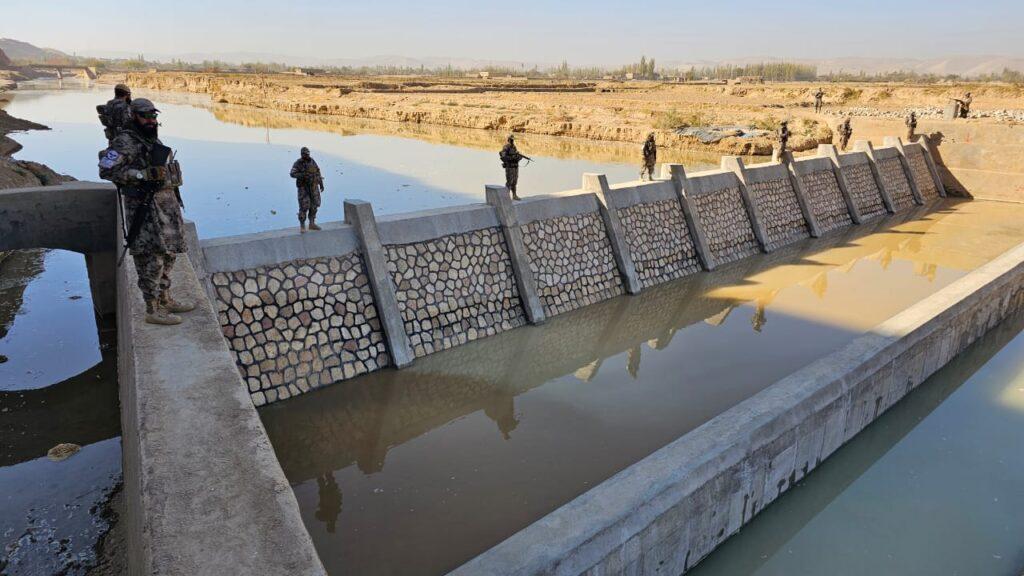
Mohammad Raouf, another farmer also from Bati Kot, said, “Previously, rainwater used to go to waste, but now it is stored in these check dams. This prevents floods and is very beneficial for us, as we can irrigate our fields with it, which is extremely helpful during droughts.”
They add that previously rainwater went to waste, but now it is stored in the check dams—an action that both prevents floods and provides significant benefits to farmers during drought.
According to these farmers, many agricultural lands in previous years were damaged due to water scarcity or floods, but the construction of check dams can help reduce these problems and create opportunities for improved agricultural activities.
On the other hand, water experts also emphasize that check dams prevent soil erosion and promote the expansion of green areas.
Wahid Islam, a specialist in water management, says such projects play an important role in mitigating the negative effects of climate change. According to him, controlling the speed of water flow during floods reduces damage to homes, roads, and farmland, and as a result, it reduces economic losses for people.
He adds, “In areas with check dams, the presence of water has very positive results. Groundwater remains in place, and its level does not drop significantly because water is retained in the check dams and recharges the soil. Another benefit is that check dams control the speed of floodwaters, and in areas where they are built, water can also be used for agriculture.”
Water experts say that if the construction of check dams continues in Nangarhar and other provinces of Afghanistan, and these projects are properly managed, water shortages and damages caused by natural events will be significantly reduced in the future. They believe that expanding such projects, along with proper water resource management, can play an important role in strengthening agriculture and improving people’s livelihoods.
Reporter: Wasifullah Osmani