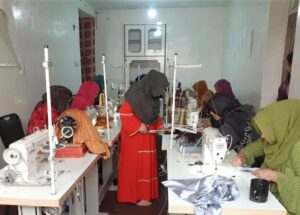
Findings by Salam Watandar, based on interviews with 28 youths (14 girls and 14 boys), show that many of them have improved their personal, educational and professional skills by using free instructional videos on social media.
According to the findings, nine participants learned computer-related skills such as programming, Access, networking, and graphic design. Six others learned foreign languages, while four participants gained skills in video editing and content creation, which helped them find job opportunities.
The youths said they received digital training through two-, three-, four-, and six-month online courses on platforms like YouTube, Facebook, Instagram, Telegram, and WhatsApp. They explained that low cost, lack of access to in-person training centers, and the freedom to learn anytime and anywhere are the main reasons they choose online education.
Ahmadzia Tabesh, 22years old from Ghazni said that he learned foreign languages through online videos.
He said: “I studied Turkish online through YouTube for about four months, and it was very useful. Today, we can study from home and create a university-like environment for ourselves. Online learning is also very cheap—almost free. You only need internet.”
Zakia Muslem Zohad, 25years old from Kabul also said that she learned foreign languages through online videos. She said she used free educational videos on YouTube and WhatsApp, and through these platforms, she was able to learn English and German using online tutorials.
Sara Ahmadi, 23 years old from Kabul, said she completed a six-month free digital course in computer skills and graphic design through online videos.
She explained that most of her training focused on graphic design, English, and digital marketing, and that the learning process continued on and off. She started her online education in early 1402 (2023–2024).
Samiuddin Azizi, a 24 years old economics graduate from Kabul, said he learned digital marketing, online sales, and customer consulting through three months of online training on Telegram and WhatsApp. He added that the training was gradual and continuous and helped him improve practical skills.
Sunil Bayat, 27 years old from Kabul, said he learned news writing, image editing, and content creation by watching videos on YouTube and Facebook.
He explained that these courses helped him understand social media management and media skills, and he was able to apply what he learned directly in his work.
Many youths said that online education has brought the classroom and university into their homes. However, they also pointed out serious challenges, such as poor internet quality and lack of proper devices like laptops and smartphones.
Abdulwahed Nazari, a journalism student from Kabul who is 24 years old, said the high cost of internet and lack of laptops are major problems. He added that weak internet in some areas makes learning difficult.
Yalda Asil Taimuri from Parwan who is 20 years old, said she struggled at first because she did not have a computer. Watching lessons on her mobile phone was difficult, and slow internet made it hard to download or watch videos properly.
Badrullah Danesh, technology issues expert, said that the success of social media-based learning depends on checking the source and quality of the content. He explained that digital education is flexible and allows learners to study at their own pace, but its reliability depends on how well the content meets educational standards.
Meanwhile, officials from the Ministry of Communications and Information Technology said they have made progress in reducing internet and call costs over the past four years.
Enayatullah Alokozai, spokesperson for the ministry, told Salam Watandar that internet and call prices have decreased, and service quality has improved. He said that in 2024, the ministry leased 48 frequencies in three different bands to telecom companies, which invested nearly 98 million USD. This investment, he explained, will help expand 4G services across Afghanistan.
Experts believe that despite its challenges, digital education is an important alternative to in-person learning and plays a strong role in empowering youths and building practical skills.
Reporter: Sharifa Qasemi