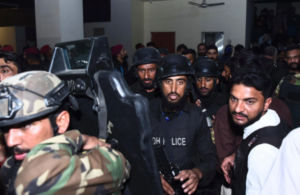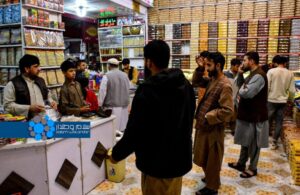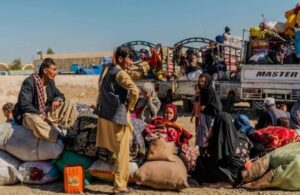
Lately, Afghan migrants in Pakistan have faced an alarming increase in police crackdowns and arrests. Many have expressed growing fears for their safety, with some saying they no longer feel secure, even within the confines of their own homes.
Several of these migrants have added that women and children are increasingly being detained, and no one is advocating on their behalf.
Hadi Ghafari, an Afghan migrant in Pakistan, says: “The police are conducting house-to-house searches. Those with documents have been given a month to leave the country. Unfortunately, the situation is such that no one can leave their homes. The police, in civilian clothes, are deporting Afghans by any means.”
Zaher Bahand, another Afghan migrant in Pakistan, also shares: “The lack of proper documents, expired visas, no schools for children, harassment by the police, and economic difficulties are major challenges we face. A nationwide operation has been announced, and for the past three to four days, they have been checking every house at night. Last night, 11 women with their children were arrested and taken away, and it is difficult to move freely around the city.”
Afghan migrants in Pakistan also report that those without any documents, other than visas and passports, are not allowed to stay or roam freely in the country.
Sardar Ahmad Shekib, the Acting Ambassador of Afghanistan in Islamabad, states that the arrests of Afghan migrants in Pakistan have increased, but they are seeking direct dialogue with the Pakistani government to resolve the issue.
He adds, “We received many reports that the arrests of Afghans have begun in various areas, and even women and children have been detained. Most Afghans here have documents, but a small number do not. We are working to resolve this issue through cooperation between Afghanistan and Pakistan.”
Mr. Shekib also mentions that the increased crackdowns and arrests, aside from fostering widespread hatred, are not helping to resolve the challenges in Pakistan.
On the other hand, some Afghan migrants who recently returned from Iran complain about the severity of restrictions there. They say that, upon returning to Afghanistan, they are faced with economic difficulties and confusion.
Noorullah says, “I had documents, but they deported me despite that. I lost my job. Our economic situation in Afghanistan is poor. We go to other countries to work, doing labor jobs, but the treatment we receive is awful. Unfortunately, when we return here, some days there’s work, other days there isn’t.”
Wahida, another migrant, says: “I was in Iran for five years. My husband had a nerve condition, and I worked to support our family. The restrictions were very harsh, and I was expelled. My three children, aged 10, 11, and 9, stayed behind while I was deported.”
These Afghan migrants add that despite the harsh conditions in Iran, they would still consider returning due to the lack of work opportunities in Afghanistan.
On Saturday, Iranian Interior Minister Eskandar Momeni announced that since the beginning of this year, more than one million Afghan migrants have been expelled from the country, with 50% of them returning to Iran.
According to Mr. Momeni, Iran no longer has the capacity to host Afghan migrants, and the arrests and expulsions will continue.
It’s worth noting that since the start of this year, hundreds of thousands of Afghan migrants have been deported from Iran and Pakistan to Afghanistan.