KABUL (SW) – The Special Inspector General for Afghanistan Reconstruction (SIGAR) has released a new report underlining the United Nations’ commitment to sending humanitarian aid to Afghanistan. However, the report expresses concerns about the possibility of a decline in international assistance for the country, particularly from the United States.
In its latest report published on Wednesday, SIGAR discussed humanitarian assistance from the international community, with a particular focus on the contributions from the United States of America to Afghanistan.
The report adds: “Although the UN expects to continue its cash shipments to Afghanistan, there are several reasons why the amount of cash it purchases, transports, and transfers in Afghanistan will likely decline in the future.”
“First, UN funding for Afghanistan is declining. In May 2023, the UN revised its 2023 Humanitarian Response Plan to reflect a 30 percent decrease in programming budget amounts that have primarily resulted from decreased funding from international donors,” according to the SIGAR’s report.
Additionally, as of June 2023, the Humanitarian Response Plan received only 9 percent of its $4.6 billion total funding requirement. Similarly, the UN’s 2023–2025 Strategic Framework for Afghanistan reflects a risk of further reduction in programming activities due to waning donor support for future programming in Afghanistan.”
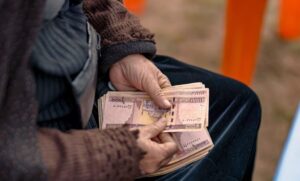
SIGAR further noted that since August 2021, the UN has purchased, transported, and transferred at least $2.9 billion to Afghanistan using international donor contributions. “The U.S. is the largest international donor, having provided about $2.6 billion in funding for the UN, other PIOs, and NGOs operating in Afghanistan since August 2021.”
More than $1.7 billion of the funding came from the State and the U.S. Agency for International Development (USAID ) to support humanitarian activities implemented by PIOs and NGOs, including the UN, the World Bank, and the Colombo Plan, according to the report.
SIGAR has claimed that the cash aid from the United Nations has benefited the Central Bank of Afghanistan/Da Afghanistan Ban (DAB) under the control of the Islamic Emirate. An official from the Central Bank of Afghanistan has not responded to Salam Watandar’s questions about this matter as of the time of writing this report.
The Ministry of Economy asks for increased collaboration from the international community beyond humanitarian aid to enhance the economic and living conditions of the Afghan citizens.
“If the United Nations and the international community align their efforts with Afghanistan’s economic priorities, concentrating on development programs that generate employment opportunities, it will contribute to the gradual improvement of the economic situation for the Afghan people,” said Abdul-Rahman Habib, the spokesperson for the Ministry of Economy.
Meanwhile, Abdul-Nasir Rashtiya, an expert on economic issues, emphasizes reviewing the ways of providing humanitarian aid in Afghanistan to deal with the humanitarian crisis caused by poverty.
Meanwhile, Abdul-Nasir Rashtiya, an expert on economic issues, emphasizes the need to review the methods of providing humanitarian aid in Afghanistan to address the humanitarian crisis resulting from poverty.