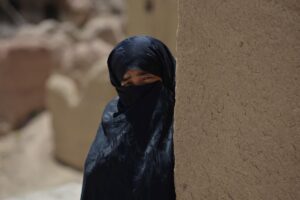
Informal arbitration; a reference for resolving women’s legal problems in Daikundi
A number of women in Daikundi say they prefer informal arbitration over formal legal institutions to resolve their legal disputes.

A number of women in Daikundi say they prefer informal arbitration over formal legal institutions to resolve their legal disputes.
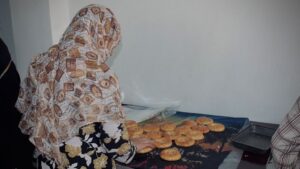
A young girl in Maimana, the capital of Faryab province, has created an income source for herself and several other girls by starting a small cookie-baking workshop.
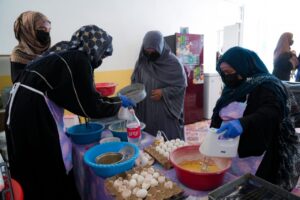
The United Nations in Afghanistan (UN Afghanistan) says it has supported 18,616 women entrepreneurs across the country.

Some women in Sar-e Pol say that a lack of awareness about the importance of birth spacing, along with family pressure, beliefs, and traditions, has led them to have repeated pregnancies. They add that this has caused serious health problems and, in some cases, miscarriage.

Findings from Salam Watandar’s interviews with 20 women in Afghanistan show that AI is mostly used by women in areas such as education—especially language learning—editing writing, content creation, accessing health information, and generating business ideas. However, alongside these opportunities, deep concerns about privacy, data security, and the accuracy of responses have made their experience with AI complex and ambivalent.

Legal experts and religious scholars emphasize that women have the right to insert lawful conditions in the marriage certificate (Nikah Nama) prior to marriage, and if the husband fails to act in accordance with such conditions, the wife may demand her rights through legal channels. However, some women complain that after years of marriage, the very conditions agreed by their husbands’ side prior to the marriage certificate have not been fulfilled.
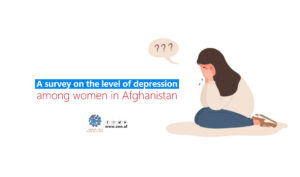
For this reason, the Salam Afghanistan Media Organization (Radio Salam Watandar) conducted a field survey in 26 provinces of the country and examined the mental health status of 401 women, aiming to present a realistic and scientific picture of depression among women in Afghanistan. The findings of this survey show that nearly half of the surveyed women experience moderate depression, which can be considered a serious threat to women’s mental health in Afghanistan.

The results of a Salam Watandar interview with 18 teachers who are also mothers, conducted across six provinces—Panjshir, Sar-e Pol, Daikundi, Baghlan, Kabul, and Samangan—show that 13 of them have been able to achieve a balance between teaching and motherhood through planning, division of responsibilities, and family support. However, the remaining five face serious challenges due to lack of family support and resources.
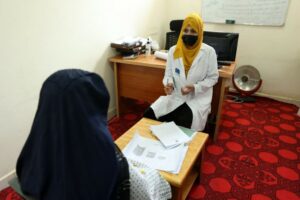
A number of obstetricians and gynecologists at Malalai Hospital say that premarital counseling is important for both girls and boys, and that examinations such as blood group and Rh factor, hormonal tests, spermograms, evaluations of male and female reproductive health, and uterine health checks are essential before marriage.

Although Islamic Sharia emphasizes consultation and mutual family understanding in decision-making — including marriage — in many families in Afghanistan the role of mothers in this process is overlooked, and they are excluded from decision-making.
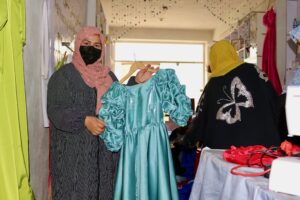
The government of Japan, in partnership with the United Nations Development Programme (UNDP), has announced a new joint initiative titled “Resilient Income Solutions Empowering Alternative Livelihoods” (RISE) aimed at supporting vulnerable communities in Afghanistan.

She has plans for the future and wants to expand her flower cultivation. She says, “I tell all women not to lose hope. Start with small steps and believe in yourselves. Every woman can make a difference.”