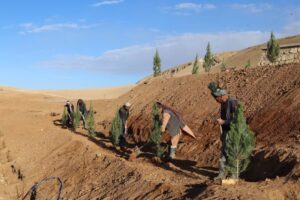
UNDP plans to plant 30,000 trees in Afghanistan
The United Nations Development Programme (UNDP) in Afghanistan has announced plans to plant 30,000 trees across several provinces of the country.

The United Nations Development Programme (UNDP) in Afghanistan has announced plans to plant 30,000 trees across several provinces of the country.
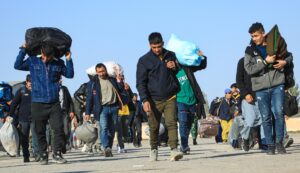
The findings of Salam Watandar’s interviews with 17 Afghan youth who were born in Iran and Pakistan and returned to Afghanistan over the past year show that some of them are facing economic, social, and educational challenges. These difficulties have made it harder for them to integrate into and adapt to Afghanistan’s social and cultural environment.

Salam Watandar’s interviews with 14 women whose children have a hole in the heart (Atrial Septal Defect) show that limited access to healthcare centers during pregnancy and childbirth, along with a lack of awareness about the disease, has delayed the diagnosis and treatment of their children.

The United Nations Development Programme (UNDP) in Afghanistan plans to establish 75 solar-powered greenhouses in the country.

Farah, with its 11 districts, is one of the important agricultural provinces in western Afghanistan. However, differences in climate and declining water resources pose serious challenges for farmers in some parts of the province. This year, rainfall has been better than in previous years, helping increase the production of some crops. However, drought, sandstorms, and falling groundwater levels continue to threaten farmers’ livelihoods.

As the urban population grows and the amount of waste increases, the shortage of trash bins has become a major challenge for residents of Ghazni City, the capital of Ghazni Province.

The Embassy of Pakistan in Kabul held a ceremony titled «Black Day of Jammu and Kashmir» to mark the 79th anniversary of the arrival of Indian forces in Srinagar on October 27, 1947.

The United Nations Office for the Coordination of Humanitarian Affairs (OCHA) in Afghanistan has announced that Kuwait has donated $2.5 million to the country.

Traffic congestion on the roads of Pol-e Khumri, the capital of Baghlan province, is making daily life difficult for residents. Drivers complain about higher fuel costs and blocked roads, residents say they are often late for work and school, and shopkeepers report a drop in the number of customers.

My name is Sahar Rahimi. Like many other girls my age, I had big dreams for my future. After graduating from high school, I studied hard for the Kankor exam. My goal was clear: I wanted to study English at the Faculty of Literature at university. When the results came out and I found out that I had passed the exam, I felt as if the whole world belonged to me. I was full of hope and wanted to begin my university journey so that I could build a better future for myself.

Afghanistan loses billions of dollars every year because of natural disasters and the consequences of climate change. Forecasts suggest that rainfall and snowfall may increase in the coming months, which could benefit the country’s water resources and agriculture. However, experts warn that without proper preparation, this increased precipitation could cause floods, avalanches, landslides, and serious loss of life and economic damage.

A number of youth in Afghanistan who bear the burden of meeting their families’ needs say that this responsibility has deprived them of educational opportunities, career goals, and the joys of being young.