Category: ALL TOPICS

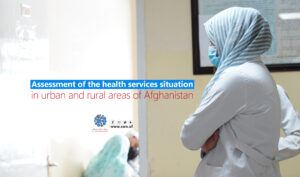
Assessment of the health services situation in urban and rural areas of Afghanistan

This research was conducted to assess access to health services situation in urban and rural areas of Afghanistan. The results, based on a survey of 1,136 citizens across 32 provinces, indicate significant differences between urban and rural areas in terms of access, quality of services, and availability of medicines. Findings suggest that rural residents face greater challenges in obtaining quality health services.
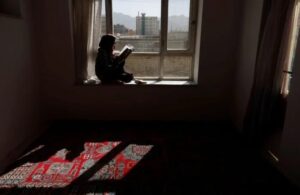
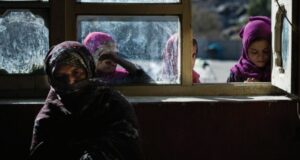
Beginning of the academic year; stories of girls awaiting education

Shayesta, a 38-year-old mother of four children, says she cannot afford online classes for her daughter who has been deprived of education, “As much as we could afford, we enrolled her in online courses—once in a home-based school and in a religious school —but now our economic situation is weak, and we can no longer afford even these online classes. For now, she reviews her lessons at home.”

From planting saplings to raising awareness; youth initiative to save the environment

Reza Jafari, a 35-year-old from Daikundi who has been working as a volunteer in greening activities for the past year, says, “The main reason we turned to volunteer work was that everywhere we look in our country, unfortunately, the hills have been stripped of forests, and plants have disappeared due to people’s excessive use and population growth. A lack of public awareness has led people to overexploit mountain forests.”

Survey on women’s purchasing power in Afghanistan; the impact of unemployment on women’s purchasing ability

This survey, conducted with the participation of 1,045 women from 29 provinces of Afghanistan, provides a comprehensive and detailed picture of women’s purchasing power, savings capacity, sources of income, and their economic limitations. The findings indicate that women’s purchasing power—especially among unemployed women—has declined over the past three years, and the economic crisis has had profound impacts on households.

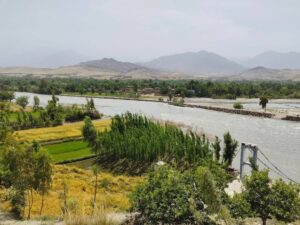
Farmers in Laghman call for better management of Alishang and Alingar Rivers

Laghman is a province where most of its population earns their living through agriculture and natural resources. With its green mountains, natural forests, and flowing rivers, this province is considered one of Afghanistan’s most important agricultural and natural areas. Two major rivers in the province, Alishang and Alingar, are essential sources of life for the people.

“They took my children”; depriving widowed mothers of custody

Similarly, Zarifa, 22-year-old from Daikundi, says that her children were taken by her husband’s family after his death. She says, “After my husband died, they took my children. They said the children should grow up in their father’s house, and argued that I am young and might remarry, so it’s better for the children to stay with them. They took my children, and I could do nothing because I am a single woman.

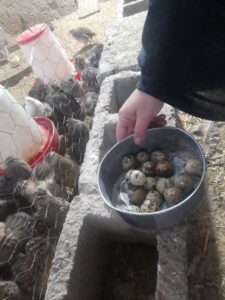
Small cages, big hopes; a woman’s quail business in Farah

A woman in Farah province has launched a small quail-farming business in an effort to reduce her economic dependence and play an active role in supporting her family’s expenses. Najiba Naji says she started raising quails with a small investment in a limited space inside her home. 

Women keep Eid traditions alive by making local sweets

For many women in Afghanistan, Eid is not just a celebration; it is an opportunity for families to gather, strengthen their bonds, and keep alive traditions that have been rooted in the country’s culture for generations. During this time, homes are filled with the colors and atmosphere of Eid, as women enthusiastically prepare Eid sofras—Sofras that symbolize hospitality, love, and the preservation of long-standing traditions.

Small loans; empowering farmers and livestock owners in Paktia

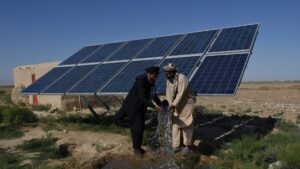
“We had a lot of land, but there was no water. We could only cultivate one plot, and the rest remained unused. When we received a loan from the EDF institute, we bought a solar system. Praise be to God, now we have enough water, I cultivate all my land, and I am earning a good profit.” he said.