Following the political and security upheavals in Afghanistan over the past decades—especially after the collapse of the previous government in 2021—many Afghans left the country in search of safety. Like thousands of others, they headed to neighboring and regional states. Kyrgyzstan is one of the countries that has, at different times, hosted a number of these migrants. For many, however, it has served more as a temporary stop than a final destination.
Sardar Mohammad Sakhi, head of the Afghan Association and a member of the Assembly of the People of Kyrgyzstan, says the Afghan presence in the country is not new. According to him, migration to Kyrgyzstan began in the early 1990s during Afghanistan’s civil war and continued in later years, including during the first period of Islamic Emirate rule.
Today, based on figures from the Afghan Association and Kyrgyz government sources, more than 1,500 Afghans live in Kyrgyzstan. Most are based in Bishkek, while smaller communities reside in Osh and a few other cities.
The legal situation of Afghans in Kyrgyzstan varies. Some have obtained Kyrgyz citizenship. Others hold permanent or temporary residence permits, while a number live under refugee status or with United Nations-issued documents. He says around 1,260 Afghans have acquired Kyrgyz citizenship, including adults, children, and elderly members of the community.
One of the main challenges remains documentation. Before the introduction of biometric and digital systems, migrant registration was not properly organized. As a result, some Afghans who have lived in Kyrgyzstan for nearly twenty years still lack complete legal documents.
Afghans in the Kyrgyzstan hold different types of papers—visas, residence cards, temporary permits, or UN refugee documents. Those under UN protection are mostly waiting for resettlement to third countries. For many, this process has dragged on for years without a clear outcome.
In terms of livelihood, most Afghans support themselves through small businesses and trade. Those with permanent residence or citizenship work in commerce, construction, services, and other freelance activities. However, people holding refugee or temporary documents are not legally allowed to work.
“This is one of the biggest problems,” He says. “People want to work and move forward with their lives, but without proper documents, they don’t have legal permission.”
The Afghan Association itself receives no official financial support from the government or international organizations. Assistance usually comes from within the community. “If a family is in need,” he explains, “we collect money among ourselves—for medical expenses, food, or even blood donation.”
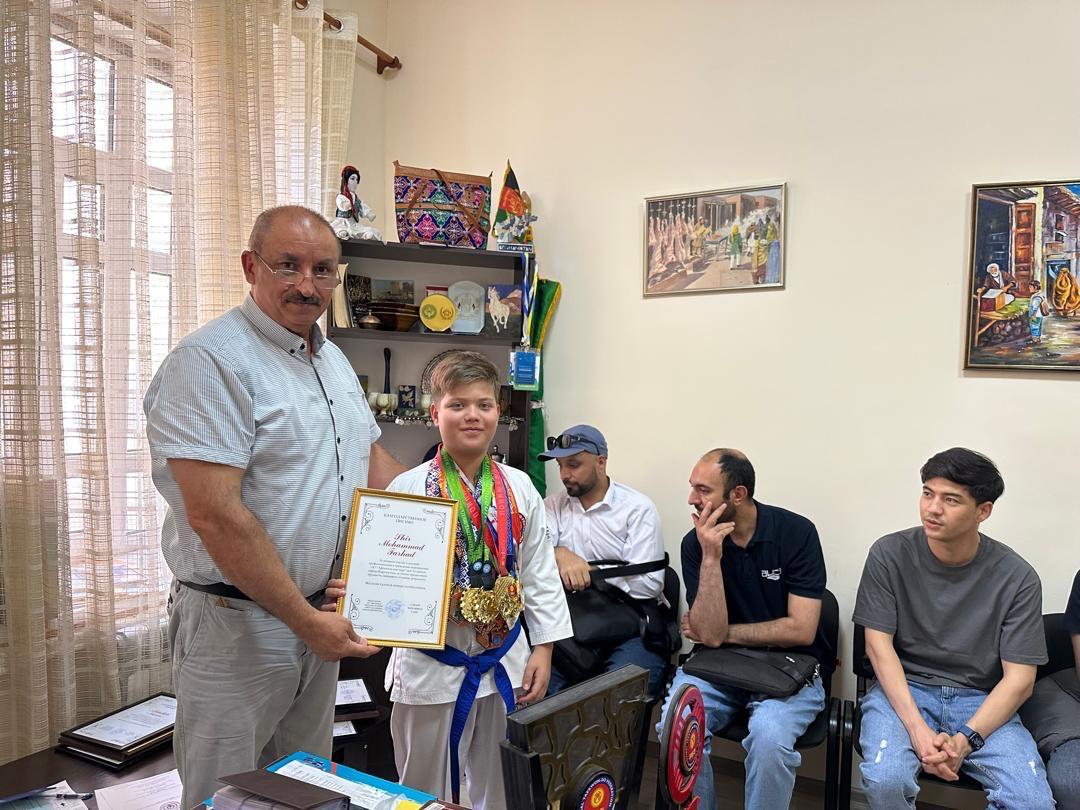
According to him, relations with Kyrgyz authorities and the general public are mostly positive. While there were cases of improper treatment by police in the past, he says that regular dialogue between the association and government institutions has helped resolve many of those issues. Deportation cases, which once occurred occasionally, have significantly decreased in recent years.
Afghan children are able to attend school in Kyrgyzstan. Still, there is concern about language and cultural identity. The association has tried to organize classes in Dari, Pashto, and even Kyrgyz, but participation has been low.
“When we announce language classes, hardly anyone comes,” he says. “But if we say there’s a recreational event or food, everyone shows up.” He worries that neglecting language and cultural education could have long-term social and cultural consequences.
Despite occasional negative perceptions linked to political developments in Afghanistan, Sakhi says that ordinary Kyrgyz citizens have generally treated Afghans with kindness. He recalls how neighbors and friends supported him when members of his family were ill. He believes that Afghan participation in cultural programs and public events has helped strengthen mutual understanding.
In the end, he says, the future of Afghans in Kyrgyzstan depends largely on personal effort. “This is not a welfare state,” he explains. “Everyone has to build their own future.”
For many Afghans, Kyrgyzstan offers relative safety and the possibility of a calm life. Yet legal uncertainty, limited work opportunities, and the long wait for a more stable future remain part of their everyday reality—a life lived somewhere between staying and leaving, between hope and waiting.
Reporter: Hoda Sadat