The Taliban, United States military, and Afghan security forces were all responsible for attacks that resulted in extensive civilian suffering before the country’s government collapsed earlier this year, Amnesty International said in a new report today.
The report, No Escape: War Crimes and Civilian Harm During The Fall Of Afghanistan To The Taliban, documents torture, extrajudicial executions and killings by the Taliban during the final stages of the conflict in Afghanistan, as well as civilian casualties during a series of ground and air operations by the Afghan National Defense and Security Forces (ANDSF) and US military forces.
Homes, hospitals, schools and shops were turned into crime scenes as people were repeatedly killed and injured.
“The months before the government collapse in Kabul were marked by repeated war crimes and relentless bloodshed committed by the Taliban, as well as deaths caused by Afghan and US forces,” said Agnès Callamard, Amnesty International’s Secretary General.
“Our new evidence shows that, far from the seamless transition of power that the Taliban claimed happened, the people of Afghanistan have once again paid with their lives.
“Homes, hospitals, schools and shops were turned into crime scenes as people were repeatedly killed and injured. The people of Afghanistan have suffered for too long, and victims must have access to justice and receive reparations.
“The International Criminal Court must reverse its misguided decision to deprioritize investigations into US and Afghan military operations, and instead follow the evidence on all possible war crimes, no matter where it leads.”
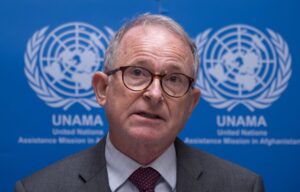
The United Nations Assistance Mission in Afghanistan reported that 1,659 civilians were killed and another 3,524 injured in the first six months of 2021, an increase of 47% from the prior year.
Taliban atrocities
As they seized control of districts across Afghanistan in July and August 2021, members of the Taliban tortured and killed ethnic and religious minorities, former ANDSF soldiers, and those perceived as government sympathizers in reprisal attacks.
On 6 September 2021, Taliban forces attacked Bazarak town in Panjshir province. After a brief battle, approximately 20 men were captured by Taliban fighters and detained for two days, at times jailed in a pigeon coop. They were tortured, denied food, water and medical assistance, and repeatedly threatened with execution.
One of the men captured by the Taliban said: “[The] Talib had taken a knife… he was saying he wanted to behead the wounded… because they are infidels and Jews.”
Another man added: “They kept us underground. When we were asking for medical treatment of the wounded, the Taliban were saying, ‘Let them die’… There was no food and water, and no support to the wounded. They had brutal relations with us. When we were asking for water, they were saying, ‘Die of thirst’.” Torture and cruel and inhuman treatment of captives constitute war crimes.
Later the same day, the Taliban also attacked the nearby village of Urmaz, where they conducted door-to-door searches to identify people suspected of working for the former government. The fighters extrajudicially executed at least six civilian men within 24 hours, mainly by gunshots to the head, chest or heart. Such killings constitute war crimes. Eyewitnesses said that while some of the men had previously served in the ANSDF, none were in government security forces or taking part in hostilities in any way at the time of execution.
The report also documents reprisal attacks and executions of people affiliated with the former government in Spin Boldak. Amnesty International previously documented Taliban massacres of ethnic Hazaras in Ghazni and Daykundi provinces.
The full scale of the killings nationwide still remains unknown, as the Taliban cut mobile phone service, or severely restricted internet access, in many rural areas.
Civilian casualties from US and Afghan air strikes
The report documents four air strikes – three most likely carried out by US forces, and one by the Afghan Air Force – in recent years. The strikes killed a total of 28 civilians (15 men, five women, and eight children), and injured another six.
The strikes generally resulted in civilian deaths because the US dropped explosive weapons in densely populated areas. Amnesty International has previously documented similar impacts of explosive weapons in numerous other conflicts, and supports a political declaration to curb their use.
The second bomb killed my mother, my uncle, my aunt, and my sister
On 9 November 2020, an air strike most likely carried out by US forces killed five civilians – including a three-month-old girl – and wounded six at a family home in the Mulla Ghulam neighbourhood of Khanabad city, in Kunduz province.
ENDS