
Category: Women

Small cages, big hopes; a woman’s quail business in Farah

A woman in Farah province has launched a small quail-farming business in an effort to reduce her economic dependence and play an active role in supporting her family’s expenses. Najiba Naji says she started raising quails with a small investment in a limited space inside her home. 

Women keep Eid traditions alive by making local sweets

For many women in Afghanistan, Eid is not just a celebration; it is an opportunity for families to gather, strengthen their bonds, and keep alive traditions that have been rooted in the country’s culture for generations. During this time, homes are filled with the colors and atmosphere of Eid, as women enthusiastically prepare Eid sofras—Sofras that symbolize hospitality, love, and the preservation of long-standing traditions.

Some women inherit land, but not its deeds in Afghanistan

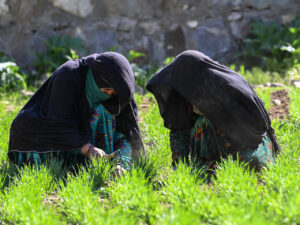
Although women’s right to own land is recognized under law and Islamic Sharia in Afghanistan, some women engaged in farming lands in Faryab say they have been denied this right. They explain that, despite inheriting agricultural land and putting in years of hard work in plowing, sowing, irrigating, and harvesting—the land deeds have still not been registered in their names due to incorrect social customs.

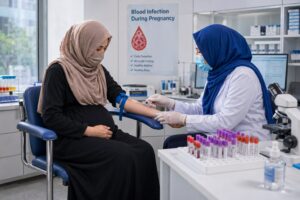
Too much sugar threatens women’s health, say doctors

A number of doctors in Kunduz say that excessive consumption of sweets among women is causing various illnesses. These doctors emphasize that overconsumption of sugary foods disrupts hormonal balance in women and may increase male hormone levels.

A female doctor was killed in Kunduz

Officials of the Kunduz Security Command announced that a female doctor was killed by an unknown person with a knife in the Imam Sahib District of the province.

The intelligent assistant; seeing AI through a woman’s perspective

I am Sadaf Yarmal, a journalism graduate, and I currently work as a reporter at a media outlet. My familiarity with artificial intelligence developed gradually through social media. Today, this technology has become an inseparable part of both my personal and professional life. At times, professional needs—and sometimes personal ones—make AI guidance a necessity in human life. My experience with this technology is also rooted in the current reality of human life, especially in media work, where using AI has become an immediate necessity.

Defining a good woman in Afghanistan; from personality to obedience

The results of Salam Watandar interview with 42 participants (21 men and 21 women) from 16 provinces of Afghanistan show that most respondents define whether a woman is good or bad not on the basis of gender, but rather on human personality traits. At the same time, 14 participants consider respect for and obedience to one’s husband to be the primary criteria for a “good woman.”

Customary pressures deny girls education, work, and spouse choice

“My mother always told me to marry the man she chose. She said I had to accept, otherwise people would gossip about us. When the suitor came, my parents met him themselves. My father said, ‘What does the girl need to do? We have seen him and his family. It would be shameful—what will people say?’ They never realized he was addicted to drugs. I am not satisfied, and my father sacrificed me for the sake of customs and people’s opinions because I could not meet the boy before the engagement.” she says.

‘My last vertebra was damaged’; stories of 15 women who faced physical violence

Asma, a 33-year-old resident of Kabul, says that although she covers most of the household expenses, she still faces physical violence—violence that has caused both psychological and physical harm. She says, “I cover about 90% of the household expenses and all the needs of my daughters. Yet I have been repeatedly beaten by my husband—slapped, punched, and kicked. The violence was so severe that my last vertebra was damaged, and now I cannot sit or stand properly. My husband beats me and asks why I do not put money in his pocket. This is extremely humiliating and painful because, even with financial independence, I still face violence.”