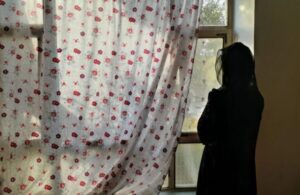
A number of women in Afghanistan have no role in making their children’s fate
She added, “They did not allow my daughter to attend school. Even though my children are now grown, I have never had any real authority in their lives.”

She added, “They did not allow my daughter to attend school. Even though my children are now grown, I have never had any real authority in their lives.”

“There are almost no sales, and people’s budgets are very tight. Several members of my family are unemployed. I opened this shop to earn a living for my family and serve people, but without enough customers and market, it’s very hard,” she says.
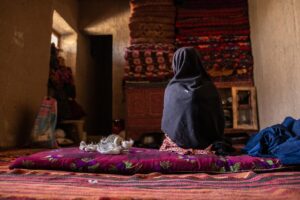
“He neither covers our expenses nor pays alimony. I live alone with my four children and have to borrow money just to buy food. When I turn to my brothers and ask what I should do, they tell me, ‘You are no longer our responsibility.’ But what can I do? I am a woman on my own,” she says.
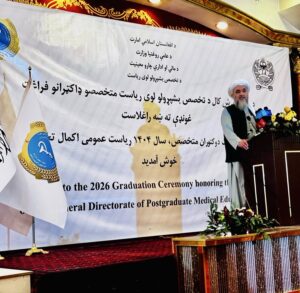
Officials from Afghanistan’s Ministry of Public Health say nearly 500 doctors from 34 provinces have received specialist certificates after completing advanced medical training in various fields. The graduation ceremony was held on Tuesday (Feb. 18) in Kabul, where close to 90 of the graduates were women specializing in obstetrics and gynecology.

Zarmina, from ‘Qalbaras’ village, shares her experience: “In my twentieth week of pregnancy, during an ultrasound, the doctor said, ‘There is fluid in your baby’s head. It may be hydrocephalus.’ I did more tests, but there weren’t enough facilities in Takhar. I had to travel to another province. The doctor told me, ‘You must stay under observation. Your baby may need surgery, and you might also need an operation.’ I’m scared, but I’m continuing my pregnancy and leaving the rest to fate.”
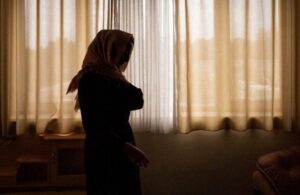
Although scholars of ‘Fiqh’ and Sharia say that, according to Hanafi jurisprudence, a sane and mature woman has full legal capacity and may work outside
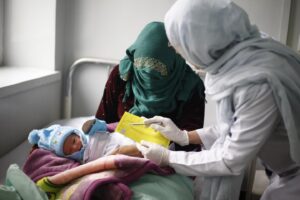
“My anemia became very severe; I had no strength to move. I received blood once or twice. It is because of poverty that I cannot go to the doctor. There were even days when we could not find bread to eat, and I spent the day drinking only water,” she said.
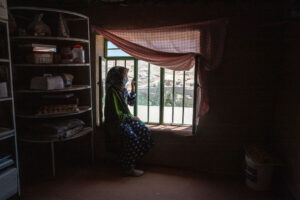
She says, “I truly lost hope at first and fell into depression. Despite all these challenges and restrictions, I did not want to give up on my goal. I want to become a doctor, and I am confident that one day I will achieve my dream.”
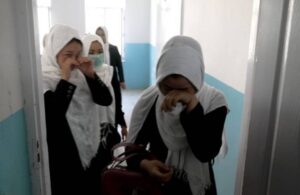
On February 11, the International Day of Women and Girls in Science, UNAMA called for the ban on girls’ education beyond sixth grade to be lifted.
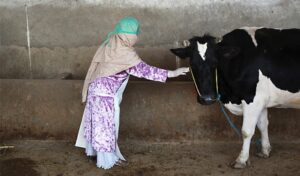
She added, “A bucket of yogurt sells for about 200 Afghanis. This work not only solves many of our economic problems partially, but it also allows us to play an active and meaningful role in our families’ economy alongside our husbands.”
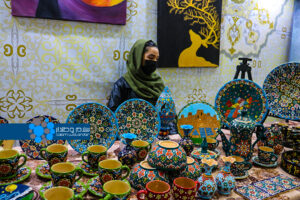
Asiya Kakar, another employee, explains, “The situation in Afghanistan is difficult. Women had nowhere to go, and the only door that remained open to us was the door of art. Economically, it really helps.”
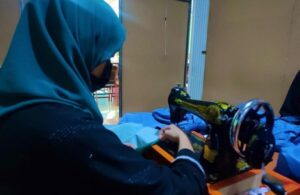
She says, “I want to stand on my own feet,” and she explains. “I cover most of my family’s expenses and take responsibility for our household.”