Category: Investigative reports

Economic challenges drive women to small loans

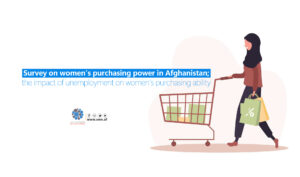
Following the political changes in Afghanistan, small businesses have emerged as a key source of hope for women seeking financial independence. Interviews with 23 women reveal that while many rely on small loans to sustain themselves, for some, these loans also bring economic and emotional stress.

Salam Watandar’s survey on people affected by the Kunar earthquake

On Sunday night, 31 August 2025, a powerful earthquake struck eastern Afghanistan, especially Kunar Province. The tremors were also felt in nearby provinces. According to reputable global seismic centers, the earthquake registered 6.0 on the Richter scale, which is relatively rare in Afghanistan’s history of natural disasters. Most districts of Kunar were affected, with the strongest shaking felt in Nurgal, Sawkai, Khas Kunar, and some other districts. This earthquake has been recorded as one of the deadliest in Afghanistan in recent years. As a result, around 2,200 people lost their lives, more than 4,000 were injured, and over 8,000 homes were destroyed.

Afghanistan drought survey: Impacts on farmers’ livelihoods and food security

Provinces like Badghis, Logar, and Kunduz are in an extreme crisis; Faryab and Maidan Wardak are severely affected, while Badakhshan is among the less affected provinces. Geographically, central provinces face high migration and land dryness, Northern provinces experience reduced production, and eastern provinces show limited coping responses.

Salam Watandar’s survey on Kabul residents’ access to drinking water

This survey, conducted with the direct participation of 1,800 families and indirectly covering nearly 15,000 residents across 20 districts of Kabul, reflects the state of groundwater and people’s access to water in the city. The findings paint a worrying picture of the water crisis facing the Afghan capital.

Rising deforestation threatens Badakhshan’s nature

Sabor Noori, a resident of Badakhshan, says that deforestation has surged in recent months, causing severe floods, soil erosion, and spreading desert-like conditions in parts of the province. He added, “Areas that used to be green and full of forests—which also helped keep floods in check, or as we Badakhshanis call it, reduced the ‘rocky water’—have sadly been destroyed. Beautiful plains and meadows are now turned into rocky, unusable land, and this makes floods even more damaging for the people.”

Why Afghan youths migrate to Iran despite of violence and crisis?

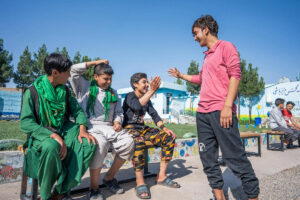
Afghan youths are leaving their country in search of economic opportunities despite serious risks abroad. Iran remains a primary destination, even amid political unrest and security threats. Salam Watandar’s findings indicates that Afghan young people are migrating to Iran despite the country is facing waves of internal instability and the threat of an external conflict.

Survey: 81% of Afghan youngsters disapprove polygamy

KABUL (SW) – In a bid to understand young people’s attitudes toward polygamy, Salam Watandar conducted a survey across 28 provinces of Afghanistan to determine which factors influence their acceptance or rejection of the practice.

Exclusive: 84% of women subjected to domestic violence by women

Salam Watandar’s survey findings, based on responses from 412 girls and women across 26 provinces in Afghanistan, reveal that 84% of participants reported experiencing violence from the same gender (female). In contrast, 16% stated that they had never been subjected to violence by womn.