
Eid brings hope and happiness to youth despite economic hardship
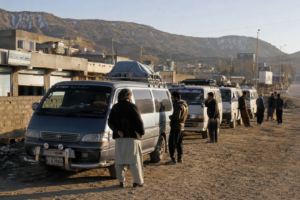
With the arrival of Eid al-Fitr, the atmosphere in cities and along roads has changed. People’s movements to visit relatives and friends increase, and the

With the arrival of Eid al-Fitr, the atmosphere in cities and along roads has changed. People’s movements to visit relatives and friends increase, and the

For many women in Afghanistan, Eid is not just a celebration; it is an opportunity for families to gather, strengthen their bonds, and keep alive traditions that have been rooted in the country’s culture for generations. During this time, homes are filled with the colors and atmosphere of Eid, as women enthusiastically prepare Eid sofras—Sofras that symbolize hospitality, love, and the preservation of long-standing traditions.

Although women’s right to own land is recognized under law and Islamic Sharia in Afghanistan, some women engaged in farming lands in Faryab say they have been denied this right. They explain that, despite inheriting agricultural land and putting in years of hard work in plowing, sowing, irrigating, and harvesting—the land deeds have still not been registered in their names due to incorrect social customs.

Officials of the Kunduz Security Command announced that a female doctor was killed by an unknown person with a knife in the Imam Sahib District of the province.

The results of Salam Watandar interview with 42 participants (21 men and 21 women) from 16 provinces of Afghanistan show that most respondents define whether a woman is good or bad not on the basis of gender, but rather on human personality traits. At the same time, 14 participants consider respect for and obedience to one’s husband to be the primary criteria for a “good woman.”

“My mother always told me to marry the man she chose. She said I had to accept, otherwise people would gossip about us. When the suitor came, my parents met him themselves. My father said, ‘What does the girl need to do? We have seen him and his family. It would be shameful—what will people say?’ They never realized he was addicted to drugs. I am not satisfied, and my father sacrificed me for the sake of customs and people’s opinions because I could not meet the boy before the engagement.” she says.

A team of young developers has designed the “Bulbul” app, making religious, educational, artistic, and novel books available in audio format, especially for young people and children. The creators of this app told Salam Watandar that users can, by downloading the program, listen to books even while working, driving, or performing daily activities, and use it to increase their knowledge and skills.

“A student is psychologically placed in two arenas: one is the field of work and the other is the field of education. Certainly, prioritizing between the two can be difficult. Afghan society is a poor society, and the priorities of young people are more economy-centered. Therefore, over time the field of education may become colder and emptier, and the studies of working youth may decline in quality and be damaged,” he says.

A number of doctors in Kabul told Salam Watandar that chromosomal disorders are among the leading causes of miscarriage — an issue that doctors describe as a silent risk for pregnant women.

Asma, a 33-year-old resident of Kabul, says that although she covers most of the household expenses, she still faces physical violence—violence that has caused both psychological and physical harm. She says, “I cover about 90% of the household expenses and all the needs of my daughters. Yet I have been repeatedly beaten by my husband—slapped, punched, and kicked. The violence was so severe that my last vertebra was damaged, and now I cannot sit or stand properly. My husband beats me and asks why I do not put money in his pocket. This is extremely humiliating and painful because, even with financial independence, I still face violence.”

Saniya, one of these women, said sadly,
“My first child looked healthy, but after a while, he died. Later, I found out that the reason was the incompatibility between my blood and my child’s blood. In later pregnancies, I had to stop breastfeeding and feed the baby with formula so that the baby’s condition would improve.”

Ziba Zuhal, a legal expert, says in this regard, “According to the Civil Code of Afghanistan, women can claim Tafriq (judicial separation) in the following cases: non-payment of alimony, causing harm, the husband’s infertility, and absence for more than three years. Under the Civil Code of Afghanistan and Islamic Sharia, the authority to pronounce divorce belongs to the man.”