Category: Soceity

From planting saplings to raising awareness; youth initiative to save the environment

Reza Jafari, a 35-year-old from Daikundi who has been working as a volunteer in greening activities for the past year, says, “The main reason we turned to volunteer work was that everywhere we look in our country, unfortunately, the hills have been stripped of forests, and plants have disappeared due to people’s excessive use and population growth. A lack of public awareness has led people to overexploit mountain forests.”
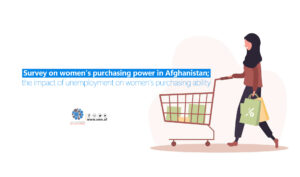
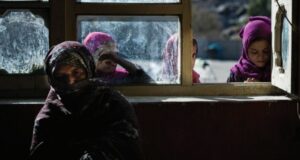
Survey on women’s purchasing power in Afghanistan; the impact of unemployment on women’s purchasing ability

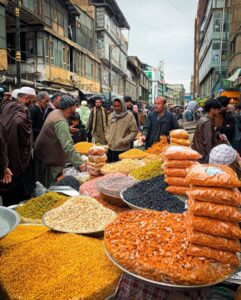
This survey, conducted with the participation of 1,045 women from 29 provinces of Afghanistan, provides a comprehensive and detailed picture of women’s purchasing power, savings capacity, sources of income, and their economic limitations. The findings indicate that women’s purchasing power—especially among unemployed women—has declined over the past three years, and the economic crisis has had profound impacts on households.

“They took my children”; depriving widowed mothers of custody

Similarly, Zarifa, 22-year-old from Daikundi, says that her children were taken by her husband’s family after his death. She says, “After my husband died, they took my children. They said the children should grow up in their father’s house, and argued that I am young and might remarry, so it’s better for the children to stay with them. They took my children, and I could do nothing because I am a single woman.

Women keep Eid traditions alive by making local sweets

For many women in Afghanistan, Eid is not just a celebration; it is an opportunity for families to gather, strengthen their bonds, and keep alive traditions that have been rooted in the country’s culture for generations. During this time, homes are filled with the colors and atmosphere of Eid, as women enthusiastically prepare Eid sofras—Sofras that symbolize hospitality, love, and the preservation of long-standing traditions.

Some women inherit land, but not its deeds in Afghanistan

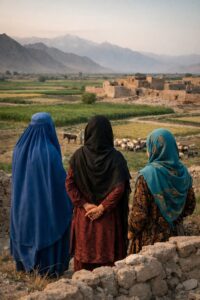
Although women’s right to own land is recognized under law and Islamic Sharia in Afghanistan, some women engaged in farming lands in Faryab say they have been denied this right. They explain that, despite inheriting agricultural land and putting in years of hard work in plowing, sowing, irrigating, and harvesting—the land deeds have still not been registered in their names due to incorrect social customs.

A female doctor was killed in Kunduz

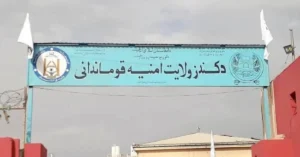
Officials of the Kunduz Security Command announced that a female doctor was killed by an unknown person with a knife in the Imam Sahib District of the province.

Defining a good woman in Afghanistan; from personality to obedience

The results of Salam Watandar interview with 42 participants (21 men and 21 women) from 16 provinces of Afghanistan show that most respondents define whether a woman is good or bad not on the basis of gender, but rather on human personality traits. At the same time, 14 participants consider respect for and obedience to one’s husband to be the primary criteria for a “good woman.”

Customary pressures deny girls education, work, and spouse choice

“My mother always told me to marry the man she chose. She said I had to accept, otherwise people would gossip about us. When the suitor came, my parents met him themselves. My father said, ‘What does the girl need to do? We have seen him and his family. It would be shameful—what will people say?’ They never realized he was addicted to drugs. I am not satisfied, and my father sacrificed me for the sake of customs and people’s opinions because I could not meet the boy before the engagement.” she says.

Easy access to books with the “Bulbul” audio app

A team of young developers has designed the “Bulbul” app, making religious, educational, artistic, and novel books available in audio format, especially for young people and children. The creators of this app told Salam Watandar that users can, by downloading the program, listen to books even while working, driving, or performing daily activities, and use it to increase their knowledge and skills.

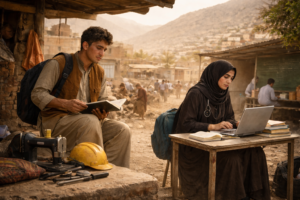
Struggle between bread and pen; youth’s efforts to balance work and education

“A student is psychologically placed in two arenas: one is the field of work and the other is the field of education. Certainly, prioritizing between the two can be difficult. Afghan society is a poor society, and the priorities of young people are more economy-centered. Therefore, over time the field of education may become colder and emptier, and the studies of working youth may decline in quality and be damaged,” he says.