Category: ALL TOPICS

Some women inherit land, but not its deeds in Afghanistan

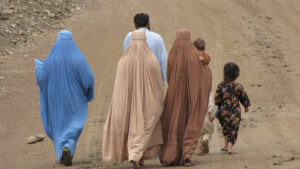
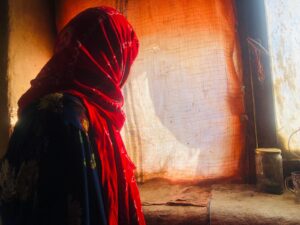
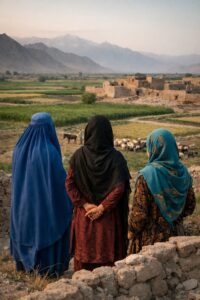
Although women’s right to own land is recognized under law and Islamic Sharia in Afghanistan, some women engaged in farming lands in Faryab say they have been denied this right. They explain that, despite inheriting agricultural land and putting in years of hard work in plowing, sowing, irrigating, and harvesting—the land deeds have still not been registered in their names due to incorrect social customs.
Decline of pasturelands threatens seasonal livestock migration in Parwan

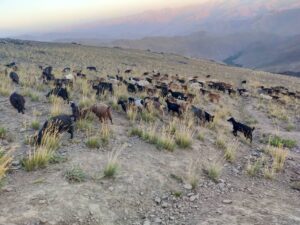
On the slopes of Parwan, where thousands of livestock traditionally begin their seasonal migration each spring, this year the routes were no shorter, yet pasturelands had declined significantly. Livestock owners who have followed specific migration patterns for years say the land has dried up, and some areas have completely lost their grazing capacity.

Too much sugar threatens women’s health, say doctors

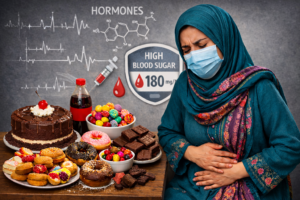
A number of doctors in Kunduz say that excessive consumption of sweets among women is causing various illnesses. These doctors emphasize that overconsumption of sugary foods disrupts hormonal balance in women and may increase male hormone levels.

A female doctor was killed in Kunduz

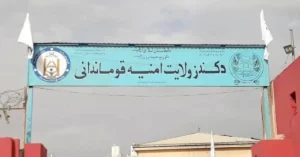
Officials of the Kunduz Security Command announced that a female doctor was killed by an unknown person with a knife in the Imam Sahib District of the province.

The intelligent assistant; seeing AI through a woman’s perspective

I am Sadaf Yarmal, a journalism graduate, and I currently work as a reporter at a media outlet. My familiarity with artificial intelligence developed gradually through social media. Today, this technology has become an inseparable part of both my personal and professional life. At times, professional needs—and sometimes personal ones—make AI guidance a necessity in human life. My experience with this technology is also rooted in the current reality of human life, especially in media work, where using AI has become an immediate necessity.

Defining a good woman in Afghanistan; from personality to obedience

The results of Salam Watandar interview with 42 participants (21 men and 21 women) from 16 provinces of Afghanistan show that most respondents define whether a woman is good or bad not on the basis of gender, but rather on human personality traits. At the same time, 14 participants consider respect for and obedience to one’s husband to be the primary criteria for a “good woman.”

Check dams; a solution to fight drought in Nangarhar

Officials at the Nangarhar Directorate of Agriculture, Irrigation, and Livestock say that in the 22 districts of province, several check dams have been constructed to feed water sources and deliver water to agricultural lands, with work ongoing on additional dams. According to the officials, these check dams are built to improve water management, prevent soil erosion, and reduce damages caused by floods—measures that ultimately help protect farmland from destruction.

Customary pressures deny girls education, work, and spouse choice

“My mother always told me to marry the man she chose. She said I had to accept, otherwise people would gossip about us. When the suitor came, my parents met him themselves. My father said, ‘What does the girl need to do? We have seen him and his family. It would be shameful—what will people say?’ They never realized he was addicted to drugs. I am not satisfied, and my father sacrificed me for the sake of customs and people’s opinions because I could not meet the boy before the engagement.” she says.

Easy access to books with the “Bulbul” audio app

A team of young developers has designed the “Bulbul” app, making religious, educational, artistic, and novel books available in audio format, especially for young people and children. The creators of this app told Salam Watandar that users can, by downloading the program, listen to books even while working, driving, or performing daily activities, and use it to increase their knowledge and skills.

Spread of “Mastitis” disease worries livestock farmers in Ghazni

Ghazni is one of the provinces where most residents are engaged in agriculture and livestock farming, and their livelihoods largely depend on these activities. The spread of animal diseases and their transmission among livestock in this province sometimes create serious challenges for farmers—challenges that, if not addressed in time, can lead to significant and irreversible economic losses.

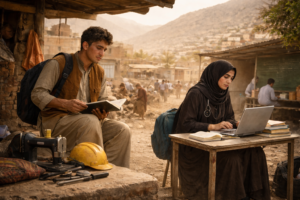
Struggle between bread and pen; youth’s efforts to balance work and education

“A student is psychologically placed in two arenas: one is the field of work and the other is the field of education. Certainly, prioritizing between the two can be difficult. Afghan society is a poor society, and the priorities of young people are more economy-centered. Therefore, over time the field of education may become colder and emptier, and the studies of working youth may decline in quality and be damaged,” he says.