WHO supports Afghanistan’s health system amid rising diseases and returnees
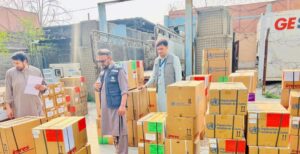
The World Health Organization (WHO) reports that in February it distributed medical supplies and screened individuals at border points for infectious diseases.

The World Health Organization (WHO) reports that in February it distributed medical supplies and screened individuals at border points for infectious diseases.

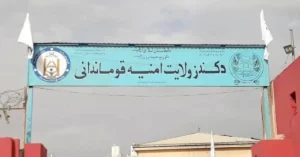
Officials of the Kunduz Security Command announced that a female doctor was killed by an unknown person with a knife in the Imam Sahib District of the province.

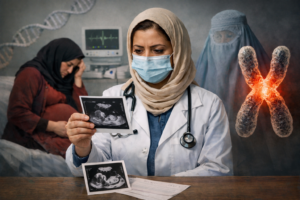
A number of doctors in Kabul told Salam Watandar that chromosomal disorders are among the leading causes of miscarriage — an issue that doctors describe as a silent risk for pregnant women.

Saniya, one of these women, said sadly,
“My first child looked healthy, but after a while, he died. Later, I found out that the reason was the incompatibility between my blood and my child’s blood. In later pregnancies, I had to stop breastfeeding and feed the baby with formula so that the baby’s condition would improve.”

“I have been teaching for three years; the factor that has made me depressed is that I am not working in my own field, and this situation has exhausted me mentally.” she says.

Yasamin, 39 years old and in her eighth month of pregnancy, shares her experience of fasting without consulting a doctor. She says, “I am in the eighth month of my pregnancy and I am fasting. I haven’t visited a doctor so far, but I continue to fast regularly. During the day, I feel extremely hungry and thirsty—my tongue sticks to the roof of my mouth. Since I started fasting, I have noticed that the movements of my baby in the womb have decreased and are not as before.”

She said, “They physically assault women who scream even a little. They don’t pay attention. They don’t even let the patient’s pain subside. I was afraid of what kind of hospital this is.”

“We are working to ensure that no child with disabilities in Afghanistan is deprived of education. We strongly encourage families to register their children at our special education centers,” he added.

She said, “My daughter is three months old. I am struggling to raise her on formula and fresh milk. I have become mentally disturbed. I feel angry most of the time, and it has become very difficult for me to care for my daughter. I keep telling myself that I will not have another child. Raising a baby without breast milk is very hard—especially when she cries.”

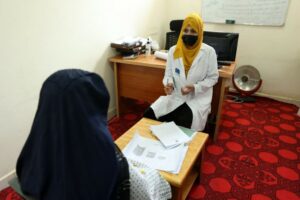
Officials from Afghanistan’s Ministry of Public Health say nearly 500 doctors from 34 provinces have received specialist certificates after completing advanced medical training in various fields. The graduation ceremony was held on Tuesday (Feb. 18) in Kabul, where close to 90 of the graduates were women specializing in obstetrics and gynecology.

Zarmina, from ‘Qalbaras’ village, shares her experience: “In my twentieth week of pregnancy, during an ultrasound, the doctor said, ‘There is fluid in your baby’s head. It may be hydrocephalus.’ I did more tests, but there weren’t enough facilities in Takhar. I had to travel to another province. The doctor told me, ‘You must stay under observation. Your baby may need surgery, and you might also need an operation.’ I’m scared, but I’m continuing my pregnancy and leaving the rest to fate.”

“My anemia became very severe; I had no strength to move. I received blood once or twice. It is because of poverty that I cannot go to the doctor. There were even days when we could not find bread to eat, and I spent the day drinking only water,” she said.