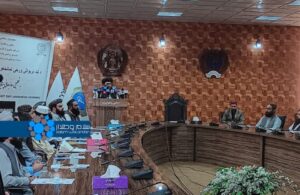
1.5 million people in Afghanistan suffer from vision impairment
Officials from the de-facto Ministry of Public Health has stated that approximately 1.5 million people in Afghanistan are currently affected by various eye diseases.

Officials from the de-facto Ministry of Public Health has stated that approximately 1.5 million people in Afghanistan are currently affected by various eye diseases.
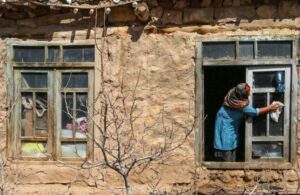
With the mounting restrictions on women’s employment, many single mothers have lost their income sources and turned to domestic labour for survival.
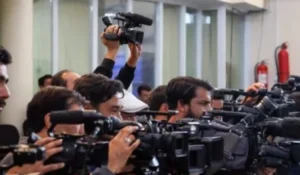
Several journalists in Afghanistan report that they have left their profession due to a combination of restrictions, lack of job security, limited access to information, and low salaries.
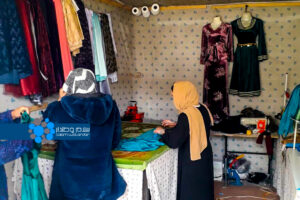
In a corner of the market in the Yakawlang district of Bamyan, a unique initiative is providing training and employment opportunities for women who have been deprived of education and work.

Officials stated that the installation of the Global Positioning System (GPS) devices in freight vehicles will enhance accuracy and transparency in the Afghanistan’s transit sector, allowing for safer transportation of transit goods.
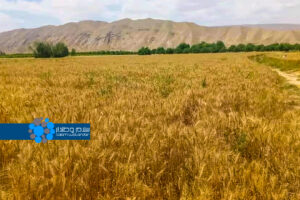
Farmers in Badakhshan are facing serious challenges with crop yields of wheat and barley significantly declining this year.
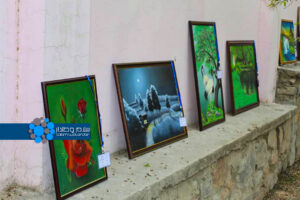
Several cultural activists who spoke to Salam Watandar, highlight that compared to the past, there is significantly less interest and activity in these artistic forms.
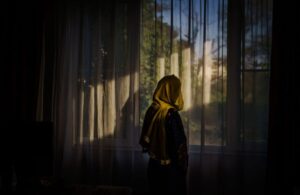
Among 30 women interviewed for this report, 13 cited family restrictions, 9 mentioned economic difficulties, 6 pointed to a lack of suitable conditions and ongoing conflict in the country, while 2 do not specify the reasons for remaining uneducated.

Farmers who have abandoned poppy cultivation over the past year are now expressing frustration about the lack of access to improved seeds for alternative crops.

A year after the devastating earthquake in the Zinda Jan district of Herat, survivors report ongoing struggles with access to basic living essentials.

Over the past decade, social media has become an integral part of the lives of young people in Afghanistan, serving diverse purposes such as passing the time and escape unemployment or a platform for educational programs and skill development.

Salam Watandar’s extensive dialogue with 80 women reveals a troubling rise in forced marriages in Afghanistan over the past three years. The study compares experiences from women who married during the Republic era to those who married after recent political changes in the country.