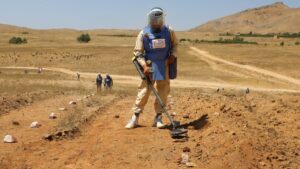
UNAMA: 50 people killed each month by mine explosions
The United Nations Assistance Mission in Afghanistan (UNAMA) has warned that Afghanistan ranks as the third country in the world in terms of having the

The United Nations Assistance Mission in Afghanistan (UNAMA) has warned that Afghanistan ranks as the third country in the world in terms of having the

Findings by Salam Watandar, based on data from Sheikh Zayed Hospital and interviews with neurology specialists, show a significant increase in stroke cases among young people under the age of 38 in Afghanistan, particularly among women.
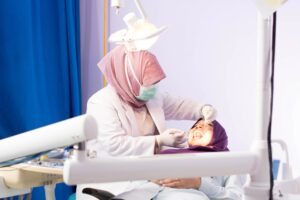
During pregnancy, paying attention to the mother’s health is a top priority. However, among all these care measures, oral and dental health is still considered a less important issue by many women. According to doctors, dental problems can go beyond simple pain and may pose serious risks to the health of the fetus.

Husna, a 25-year-old from Laghman, says she uses the internet mainly for work and teaching, “Most of my internet use is related to work and teaching. Since most of my tasks are done online, my internet consumption is high, and sometimes my family complains about my usage.”
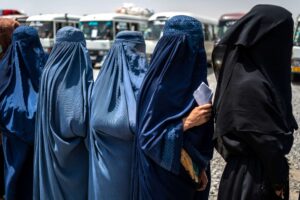
While Islamic Sharia and international documents emphasize the right of widows and women without guardians to access emergency financial assistance, evidence from Kunduz shows that many of these women are, in practice, deprived of this right. In the Holy Quran (Surah At-Tawbah, verse 60), the poor and needy are identified as rightful recipients of zakat, and in the Hadiths, caring for widows is described as equivalent to performing major social deeds.
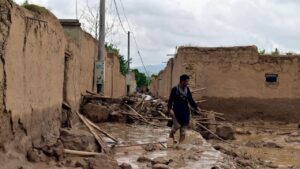
In recent years, Ghazni has increasingly been affected by climate change, with a rise in flooding causing significant damage to many families in the provincial center and its districts. Areas including Ghaib Qalandar, Hakim Sanayi Township, Khair Abad, Deh Khudaydad, Pirzada, Qala Amir Mohammad Khan, and Tawhid Abad in the provincial center, as well as parts of several districts, have repeatedly witnessed devastating floods.
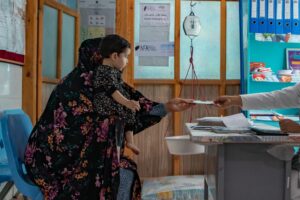
The Afghanistan office of the United Nations Children’s Fund (UNICEF) has announced that 610,000 children suffering from severe acute malnutrition in the country have been treated.
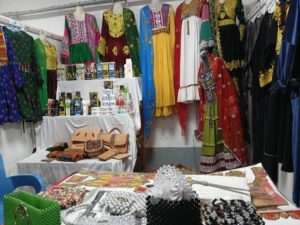
A woman in Kabul has established a tailoring and handicrafts workshop, creating opportunities for other women to learn a profession and gain employment. At a time when unemployment is a serious challenge for women, her determination and creativity have opened new pathways for others to work and earn a living.
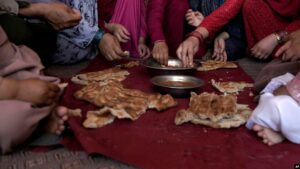
Health experts consider the ages of 11 to 14 to be the most critical stage of physical development. However, in Afghanistan, most girls at this age lack access to balanced and high-quality nutrition. Girls face not only economic hardships but also challenges caused by limited awareness, harmful traditional beliefs, and family neglect.
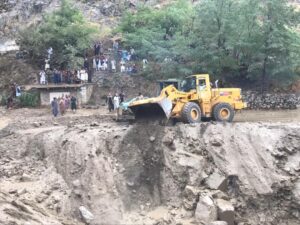
Flash floods in mountainous areas occur as a result of heavy rainfall, rapid snowmelt, and the steep slopes of valleys. In recent years, however, climate change has intensified these events and shortened response times. In the provinces of Kapisa and Panjshir, flash floods have recently caused significant damage to infrastructure and posed serious threats to residents’ lives, raising concerns about community preparedness and the effectiveness of early warning systems.
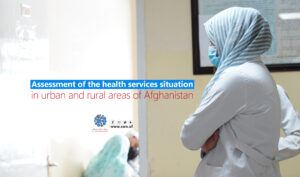
This research was conducted to assess access to health services situation in urban and rural areas of Afghanistan. The results, based on a survey of 1,136 citizens across 32 provinces, indicate significant differences between urban and rural areas in terms of access, quality of services, and availability of medicines. Findings suggest that rural residents face greater challenges in obtaining quality health services.
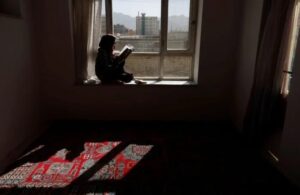
Shayesta, a 38-year-old mother of four children, says she cannot afford online classes for her daughter who has been deprived of education, “As much as we could afford, we enrolled her in online courses—once in a home-based school and in a religious school —but now our economic situation is weak, and we can no longer afford even these online classes. For now, she reviews her lessons at home.”